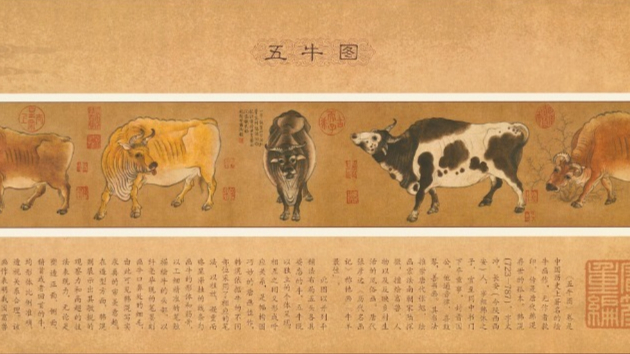
Five Oxen
Introduction
The painting is celebrated for its detailed depiction of five oxen, reflecting both the artistic prowess of the Tang era and its emphasis on agricultural development. Currently housed in the Palace Museum in Beijing, Five Oxen provides a glimpse into the cultural and artistic traditions of ancient China. The piece is considered an integral part of Chinese artistic heritage, capturing the essence of rural life and the importance of agriculture during the Tang Dynasty.
Historical Background
The Tang Dynasty, known for its cultural and artistic achievements, was a period of prosperity and cultural flourishing in China. The dynasty, which lasted from 618 to 907, saw advancements in art, poetry, and technology, and was marked by a strong emphasis on agriculture as the backbone of the economy. Five Oxen is believed to have been created during this period.
Description of the Painting
Five Oxen is a scroll painting that elegantly portrays five oxen in various postures, each one distinct in its depiction, showcasing different characteristics and temperaments. The painting is noted for its meticulous detail and lifelike representation, capturing the physical strength and spirit of the animals. The artist's delicate brushwork and careful attention to detail bring out the texture of the oxen's skin and the natural grace of their movements.
The oxen are portrayed without any background or setting, emphasizing their significance and allowing the viewer to focus entirely on the animals themselves. This minimalist approach highlights the artist's mastery in conveying emotion and character through simplicity and subtlety. The scroll format allows for a continuous narrative to unfold as the viewer's eye moves from one ox to the next, creating a dynamic and engaging visual experience.
Artistic Techniques
The artistic techniques employed in Five Oxen reflect the high level of skill and sophistication prevalent in Tang Dynasty paintings. The painter's use of fine brushwork and controlled linework demonstrates his mastery over the medium. The precision in the depiction of the oxen's musculature and fur indicates a deep understanding of both anatomy and texture.
The painting is executed in ink and color on paper, a common medium during the Tang Dynasty, allowing for fluidity and depth. The use of varying shades of ink creates a sense of volume and three-dimensionality, bringing the oxen to life. The artist's ability to convey subtle differences in the oxen’s expressions and stances speaks to a keen observation of nature and an ability to translate this into art.
The scroll format of Five Oxen also serves as an example of the narrative storytelling approach in traditional Chinese painting, where the unfolding of the scroll mirrors the unfolding of a storyline, engaging viewers as they progress through the piece.
Cultural Significance
Five Oxen holds significant cultural value as it embodies the agricultural essence of the Tang Dynasty. Oxen were revered for their strength and reliability, symbolic of the agrarian society upon which the dynasty thrived. The painting not only reflects the economic and cultural priorities of the time but also serves as a representation of the respect and appreciation for rural life and labor.
The artwork's endurance and continued appreciation also highlight the importance of preserving cultural heritage. As one of the few surviving examples of Tang Dynasty painting, Five Oxen offers insight into the artistic practices and societal values of the period. Its enduring presence in the Palace Museum further underscores its significance as a cultural treasure, admired by scholars and art enthusiasts alike.
Preservation and Exhibitions
Five Oxen is currently part of the collection at the Palace Museum in Beijing, where it is preserved as a vital cultural artifact. The museum's efforts in safeguarding the painting ensure its longevity for future generations to appreciate. Preservation techniques involve careful climate control and protective display methods to prevent deterioration due to environmental factors.
The painting has been exhibited both nationally and internationally, allowing a broader audience to engage with this masterpiece of Chinese art. Exhibitions often highlight the painting's historical context and artistic significance, providing educational opportunities for viewers to learn about the Tang Dynasty and its contributions to world culture.
Impact on Chinese Art
The influence of Five Oxen on Chinese art is profound, serving as a benchmark for later artists in terms of technique and thematic exploration. The painting’s focus on natural and rural themes continued to inspire subsequent generations of artists who sought to capture the essence of traditional Chinese life.
The detailed realism combined with expressive simplicity found in Five Oxen has been emulated in other works, contributing to the development of Chinese painting styles that emphasize naturalism and emotional depth. The legacy of Han Huang and his contributions to the art form continue to resonate within the broader context of Chinese art history.








